WHY THIS RESOURCE MATTERS
Give every comfort complaint an asset and a location
HVAC observations are easier to resolve when they connect occupant experience to a specific room, operating period, setpoint, asset, and visible condition. ‘Too warm’ without time, load, airflow, or zone information gives a service contractor little to investigate and makes recurring complaints difficult to compare.
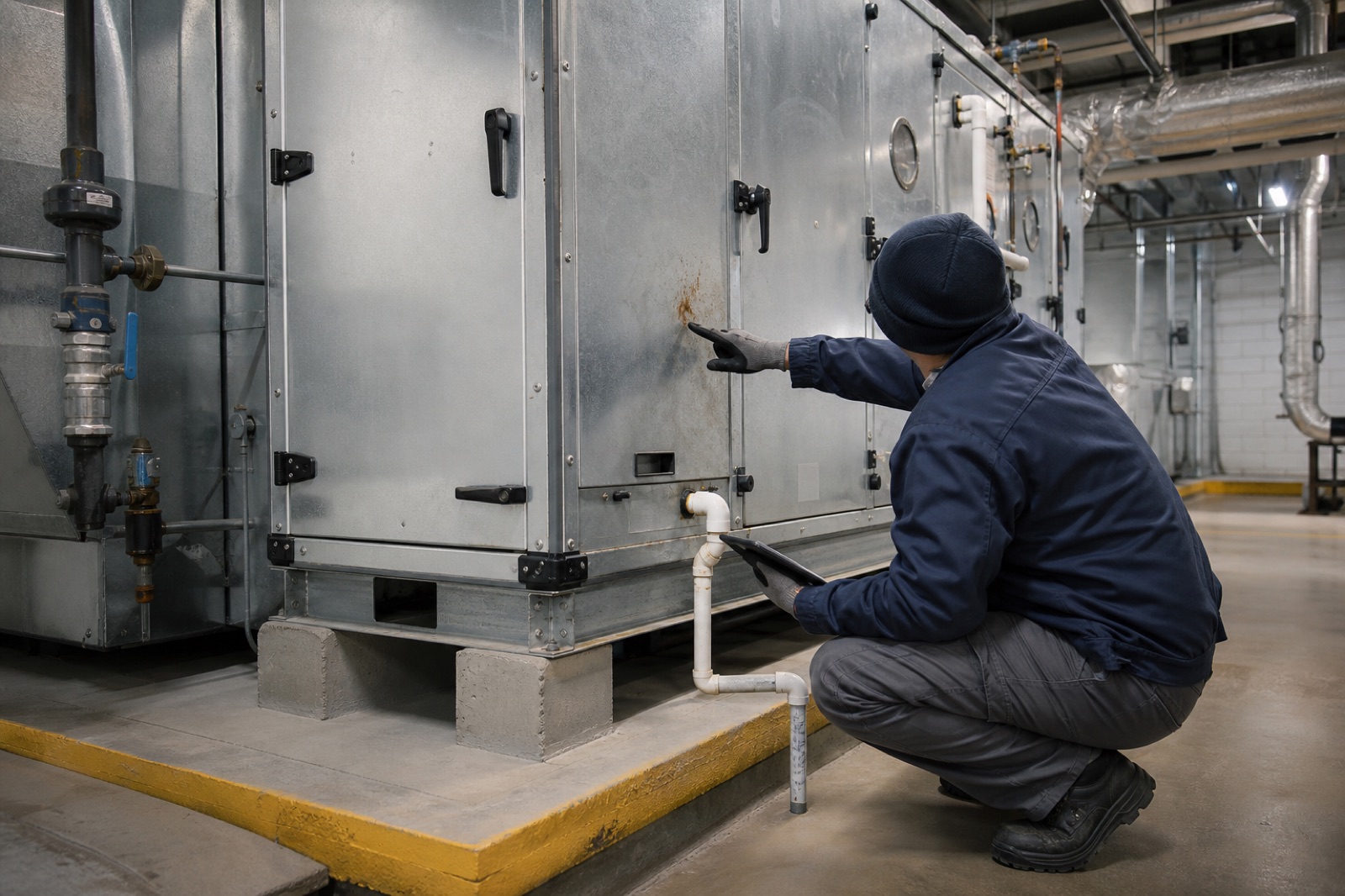
A visual walk can identify leaks, blocked airflow, dirty accessible surfaces, unusual sound, corrosion, missing labels, and maintenance gaps. It cannot establish refrigerant charge, combustion safety, electrical condition, or internal performance without competent testing, so the report should define the service question rather than guess the technical cause.
CHECKLIST
What to include
- 01Asset identification
- 02Thermostat and setpoint
- 03Visible leaks or corrosion
- 04Filter condition
- 05Airflow obstruction
- 06Unusual noise or vibration
- 07Drain condition
- 08Access and clearances
- 09Maintenance label
- 10Required service action
WHAT TO LOOK FOR
HVAC evidence that improves a service call
Water and corrosion
Drips, staining, blocked drains, wet insulation, rust, and damaged pans should be linked to the asset and affected finishes.
Airflow obstruction
Covered grilles, stored material, closed dampers, damaged diffusers, and dirty accessible filters can affect a specific zone.
Noise and vibration
Record when the sound occurs, how it changes with operation, and whether movement is visible from a safe position.
Control inconsistency
Unexpected setpoints, blank displays, repeated overrides, and different readings across a zone need time-stamped context.
Maintenance evidence
Missing asset labels, illegible service dates, restricted access, and undocumented repeated faults make future work slower.
FIELD WORKFLOW
How to use this template
- 1
Collect the complaint time, occupied area, expected condition, recent changes, and available asset history before walking the affected zone.
- 2
Record room conditions and visible terminal-unit observations, then trace the related accessible asset without entering restricted or hazardous spaces.
- 3
Describe symptoms and operating context for the service contractor, separating occupant reports from conditions directly observed during the visit.
- 4
After service, attach the work reference and verify the occupied outcome over a suitable operating period instead of closing the issue from a technician note alone.
PRIORITY GUIDE
Prioritize impact before technical diagnosis
Protect and escalate
Use for significant water release, burning signs, unsafe access, critical environmental loss, or other conditions needing prompt control.
Service soon
Use for persistent comfort loss, abnormal operation, recurring alarms, drainage issues, or deterioration likely to worsen.
Trend and maintain
Use for minor noise, early corrosion, labeling, access, or seasonal observations that benefit from comparison over time.
FIELD EXAMPLE
Example: one warm meeting room
For a meeting room that becomes warm each afternoon, note occupancy, sun exposure, time, displayed setpoint, adjacent-room conditions, and whether supply and return grilles are obstructed. Photograph the room and asset references, not just the thermostat. The service request can then ask whether airflow, control scheduling, or another cause needs testing without the inspector claiming a diagnosis from a single reading.
BEFORE YOU START
Adapt it to the job
Names, inspection frequency, acceptance criteria, retention rules, and sign-off responsibilities vary by project and jurisdiction. Remove irrelevant items and add the exact standards, drawings, specifications, and responsible people that apply to your work.
Refrigerant, electrical, combustion, and internal equipment work should be handled by qualified personnel.